Africa Builds 2060: why we are inviting companies to sign the Corporate Partner Accord
On 13 November 2026, Intelli-Wealth Africa NGO published the draft Africa Builds 2060 Corporate Partner Accord. It is a short, plain-language commitment that companies can sign to help young Africans become builders, inventors and industrial leaders. We convene the Africa Builds 2060 movement, and this Accord is how companies join it.
The draft is now open for review. Some details are still in square brackets for partners to agree, and the text will go to legal counsel before anyone signs it. This article explains what the Accord says, why we wrote it and how a company can take part.
Why companies, and why now
Africa’s industrial future will be built by people who were given the tools, the knowledge and the chance to design and make things. Talent is everywhere on this continent, but access to opportunity is not.
A 15-year-old can learn a great deal in a virtual lab. To turn an idea into a product, though, she also needs contact with real industries, real problems and real equipment. Companies hold exactly what young builders most lack: problems worth solving, machines, expertise and markets.
The Accord turns that into a clear offer. It covers learners aged 12 to 22, on a path from learner to researcher, inventor, engineer, manufacturer and exporter.
What this can look like: from a drone lesson to a factory floor
Here is the kind of path the Accord is designed to open. It is an illustration, not a real learner.
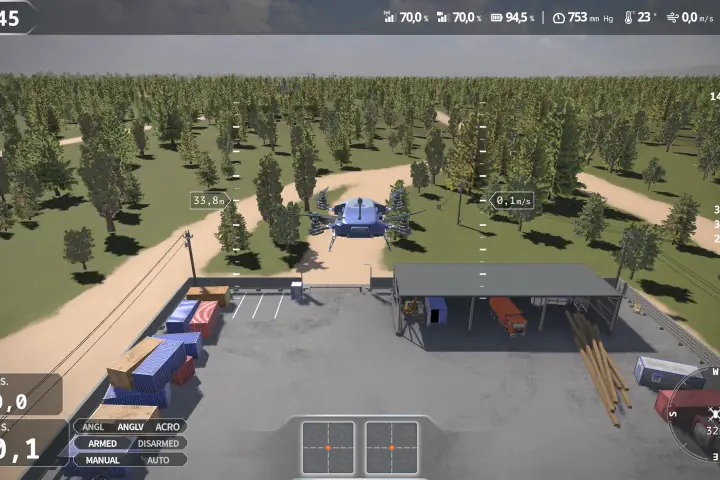
- In Grade 9, Achieng flies a virtual drone over a maize farm in the VR Labs drone simulator, and learns how crop-scouting drones spot dry patches and disease before people can see them.
- A drone services company hosts her class for a supervised site visit and shares a short problem brief: the drones are flying fine, but farmers need faster ways to act on the maps.
- A fishing cooperative on Lake Victoria shares a second brief. Its marine drone measures oxygen and temperature around the fish cages, and the readings need to reach the farmers in time to move the cages.
- Her school’s Builder Club takes on both briefs with a company mentor. The team designs a low-cost sensor and alert system that links the field drone, the lake drone and a smart, automated irrigation controller on a demonstration farm.
- At 18, Achieng joins a supervised holiday attachment at a fruit and fish processing factory. There she sees how a late harvest or a lost catch ripples through the cold store, the packing line and the export order.
- The factory decides to pilot her team’s alert system on fair commercial terms. The learners keep ownership of their design.
Every step in that story maps to a commitment in the Accord: site visits, problem briefs, mentoring, placements, equipment access and fair support for prototypes. Agriculture, food processing, maritime work and robotics are all named as sectors where companies can lead.
What companies gain
Joining is not charity. Under Article 2, companies can:
- meet and develop their future engineers, technicians, researchers and entrepreneurs;
- test ideas and new products with young innovators, universities and other companies;
- strengthen their local presence and support national skills and industrial goals;
- show their social and education commitments in a measurable way;
- join a network of manufacturers, research bodies, governments and funders across countries.
Eight principles
Every Corporate Partner agrees to act on eight principles. The most important are simple:
- Real access. Opportunities are genuine and open to under-resourced learners, with priority for girls, rural learners and young people with disabilities.
- Learning first. Programmes serve the learner. They are never a source of free labour.
- Fair treatment of ideas. Young inventors keep ownership of their original work unless they agree otherwise, in writing and on fair terms.
- Child safety. The safety and dignity of every young participant come before commercial interest.
The others cover no exploitation, integrity, honest marketing and open cooperation with other companies and public institutions.
A menu of commitments
Companies choose what fits their business from a menu of eight areas, and commit to at least two in their first year:
- industry exposure, such as site visits, factory tours, farm visits and real problem briefs;
- mentoring, including support for women mentors in technical fields;
- learning placements, with paid transport, meals and safety equipment, and stipends for longer placements;
- access to equipment, workshops, laboratories, software and test facilities;
- funding and in-kind support, including technology, connectivity and devices;
- prototype and product support, from concept to testing and certification;
- skills and training for teachers and instructors;
- local manufacturing and supply-chain openings for young innovators and start-ups.
Each company records its choices in a one-page Corporate Commitment Schedule, with numbers and dates.
Safety comes first
Article 5 is not optional. Every partner needs a written child-safeguarding policy. Staff who work with learners are vetted and briefed, and are never left alone and unrecorded with a child.
Learners under 18 take part only with written consent from a parent or guardian and with a teacher present. Minors never operate dangerous machinery, work at heights or with hazardous chemicals, or work at night. Every visit and placement follows a documented risk assessment and a safety induction.
Young inventors keep their ideas
Learners keep ownership of their ideas, designs, code and research. A company cannot make ownership a condition of mentoring, equipment access or a placement. When a company and a learner develop something together, they agree on ownership, credit and revenue sharing in writing before the work starts. For minors, a parent or guardian signs, and the learner can get independent advice.
Five ways to take part
The Accord describes five partnership tiers. They recognise contribution, never influence over what learners are taught or who is selected:
- Founding Partner: multi-year support across several areas, and a seat on the Corporate Advisory Group.
- Strategic Partner: significant support in at least two areas for at least two years.
- Sector Partner: support focused on one sector, such as agriculture, food processing, energy, aviation, maritime, space, robotics or ICT.
- Supporting Partner: an annual contribution in one area.
- SME and Start-up Partner: in-kind help such as mentoring, a site visit or a placement, with lighter obligations.
Open reporting
Each partner reports once a year on learners reached, mentoring hours, placements, the value of funding or in-kind support, safeguarding matters handled and projects supported. The Secretariat publishes a summary of what all partners contributed, and the Accord is reviewed with partners every few years.
How to join
A company joins by signing the Accord and submitting its Commitment Schedule. The Secretariat may ask for basic details, such as registration, ownership and a safeguarding policy, before confirming admission. The Accord is voluntary: it is a declaration of intent, not a contract. Any placement, equipment loan, funding or joint project is set out in its own written agreement.
The Accord runs until 31 December 2060, the horizon of the movement’s name. Commitment schedules are renewed every one to three years.
Talk to us
If your company runs a farm, a factory, a workshop, a drone or marine operation, a lab or a supply chain, there is a place for you in Africa Builds 2060. Write to Intelli-Wealth Africa at [email protected] or call +254 750 622 970 to receive the draft, share comments or talk about your first commitments.
The next generation of African builders is already in our classrooms. The Accord asks companies to open the door to the real world for them.